Monroe’s Childhood:
Audio Transcription
Monroe’s Childhood
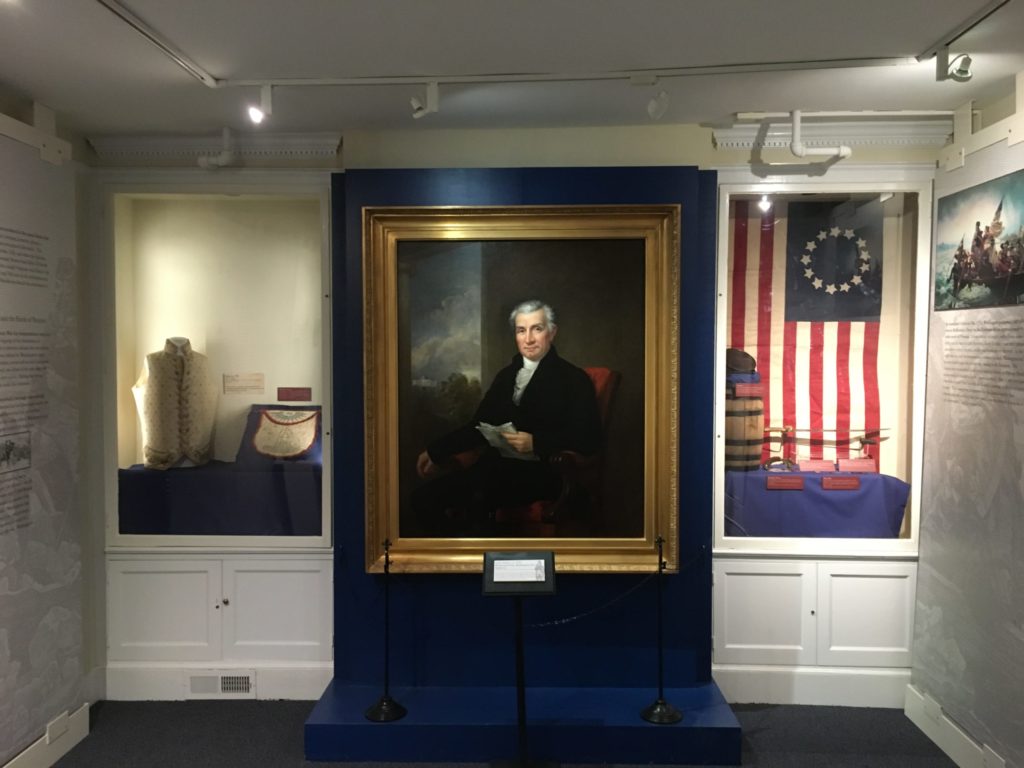
James Monroe was born on April 28th, 1758 in Westmoreland County, Virginia the second of five children. He had an older sister, Elizabeth, and three younger brothers, Spence, Andrew, and Joseph. His parents, Spence and Elizabeth Monroe, were members of the “landed gentry” in Virginia society, meaning they were wealthy in their land holdings, owning 500 acres on the banks of a waterway near the Potomac, now known as Monroe Creek. His father not only worked the family farm, but also plied the trade of a “joiner,” cabinet maker. The Monroe family lived in a modest home, Monroe Hall, with few of the extravagances of their contemporaries, like the Lee or Carter families. In 1774, when James was 16, his father passed away. Spence’s wife, Elizabeth, had died previously in approximately 1772. Young James was left to care for his younger brothers, and provide for their future stability. James was not alone, however. His mother’s bother, his uncle Joseph Jones, took an immediate interest in the young man, and took over the costs of his education. Jones, who was a very prominent judge in King George County, encouraged his nephew to look towards a career in law and politics.
The College Years:
Audio Transcription
The College Years
With the encouragement of his uncle, James enrolled in the College of William and Mary in the colonial Virginia capital of Williamsburg in 1774. Monroe lived in the Wren building on the college grounds, in a large dormitory room with all of the students enrolled at the school. For James, the raucous lifestyle available to him and his classmates was something entirely new. He joined the local Masonic Lodge, which provided a social and a political outlet. He could visit taverns every night of the week, take in a variety of shows and entertainment, and mingle with the daughters of high society. However, Monroe was soon caught up in something much more fascinating to his political sensibilities.
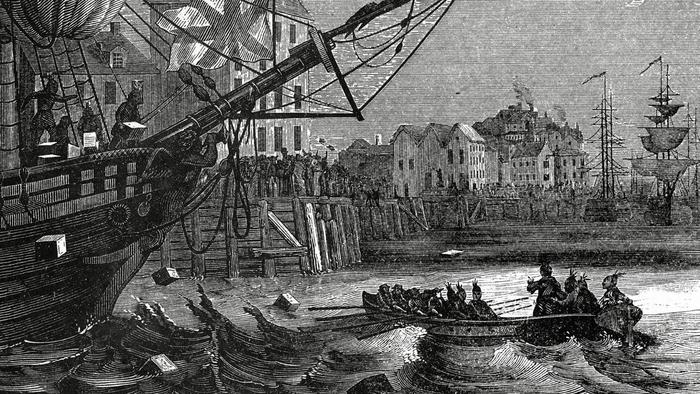
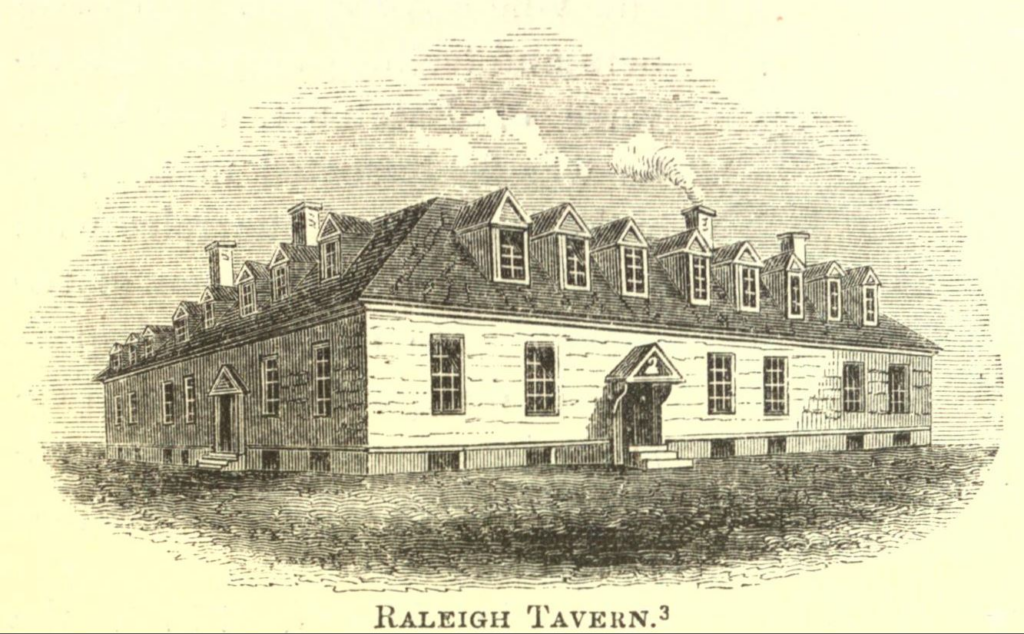
Revolutionary fervor had Williamsburg firmly in its grip in the summer of 1774. James arrived in the city in the year following the events surrounding the Boston Tea Party, and just after Lord Dunmore, then governor of Virginia, had dissolved the General Assembly. Members of the Assembly’s House of Burgesses, including James’ uncle Joseph Hones, refusing to disband, met at Raleigh Tavern where they drafted a resolution boycotting goods imported from the British East India Company. The tension was palpable, and for James it was almost impossible to focus on his studies. On April 19th, hostilities began with the first shots fired at Lexington and Concord. It was clear that all-out war was inevitable. The anticipation and excitement for a young man who has been raised with a disdain for the British monarchy must have been extraordinary. His studies became completely secondary to his interest in Revolutionary matters. On June 24th, James Monroe Joined a group of 23 students under the command of Theodorick Bland, Jr. in a raid on the Governor’s Palace. The group’s objective was to seize confiscated stores of weaponry and return them to the town’s magazine, where the citizens could control their use when fighting finally erupted. The group succeeded in seizing 200 muskets and 300 swords from the Palace, which were turned over to the Williamsburg militia. The seizure was accomplished without bloodshed, as the Palace was essentially abandoned. When Lord Dunmore fled the colonial capital, he effectively took with him all vestiges of British authority in Williamsburg. Representatives at the Virginia Convention called for the creation of a Committee of Safety to take control of all public affairs. The Committee, which included James; uncle Joseph Jones, effectively became the city’s government.
The tumultuous events of 1775 clearly showed the residents of Williamsburg that their world, and that all of 13 colonies, was going to change dramatically. For students at the College, choices had to be made. For eighteen year-old James Monroe, his path was obvious. In the spring of 1776, James and his friend John Mercer made the decision to enlist in the 3rd neighborhood of Joseph Jones’. James made the long trip from Williamsburg back to his uncle’s home in Fredericksburg in order to enlist.
A Soldier:
Audio Transcription
A Soldier.
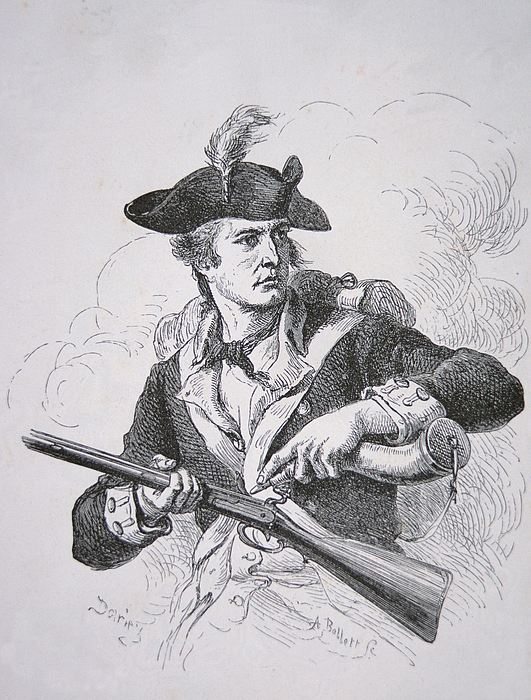
In August, 1776, the 3rd and 9th Virginia Regiments were ordered by General George Washington to join his forces in New York. The long and arduous march northward to Manhattan was a grueling experience for the men. They arrived in Washington’s camp on September 12th. Despite their long walk, Monroe’s company was given little time to rest. The British began their invasion of New York with a landing at Kip’s Bay, on September 15th.
Battle of Harlem Heights:
Audio Transcription
Battle of Harlem Heights
The day after the American loss at Kip’s Bay Monroe and the 3rd Virginia, now under the command of Colonel Andrew Leitch joined the New Englanders and engaged the British light infantry stationed in the area. It was Monroe’s first taste of battle, and it was decidedly lopsided-2,000 American troops faced over 5,000 British soldiers. Unfortunately, the initial engagement is what would become known as the Battle of Harlem Heights ended in another American retreat, with the British 42nd highlanders in pursuit. As the Americans flew, a British bugler sounded a call often used in fox hunting parties to signal that prey has been located and was on the run. The call was intended as an insult to that Americans’ ability to stand and fight. The insult enraged the American forces, and Washington ordered a halt to the retreat. He sent a group of soldiers out to lure the British onto a higher plateau and sent the remainder of his troops around the British right flank, thus cutting them off from any reinforcements to the south. The bait worked, and the British forces were soon caught in a trap between two walls of American firepower. It was now time for a British retreat. Washington’s forces managed to push the British back from the present-day location 125th Street in Harlem to 106th Street. In the end, the Americans had only 70 casualties, and had inflicted far worse on the British. Monroe and his regiment were singled out and praised for bravery while the troops were gathered for Washington’s orders the next morning.
The Battle of Harlem Heights was a small engagement, when compared to other battles of the Revolution that would follow it, but it had some long-lasting effects on the course of the war. The British hope that the war would end before it really started was short-lived. It became obvious to the British commanders and their troops that the rebellion among its colonists would not be a simple insurrection to be put down within a few months. General William Howe, especially came away from Harlem Heights with a new degree of consideration for the American troops under George Washington, and accordingly altered his plan for defeating them. On the other side of the conflict, the Americans saw that they could stand against the greatest military force in the world at that time, and their morale was heightened. Washington also gained a renewed faither in the men under his command, although he knew they were in need of better training. The stage was set for the long, hard war that was to come.
Battle of White Plains:
Audio Transcription
Battle of White Plains
Monroe and the 3rd Virginia were not involved in the main battle that took place on October 28th. Monroe’s company, however, played a decisive role in one of the skirmishes that precipitated the battle. The engagement took place at night on October 26th, and when the fighting was over, the Virginians and their Lieutenant Monroe had killed 20 British soldiers and taken 36 men prisoner. Not a single Virginian was killed in the skirmish. Both sides lost between 300 and 500 men in the skirmishes and actual battle of White Plains, and Manhattan Island was abandoned to British occupation.
Crossing the Delaware and the Battle of Trenton:
Audio Transcription
Crossing the Delaware and the Battle of Trenton
As 1776 drew to a close, the American War for Independence was in a sad state. The year that had seen the signing of the Declaration of Independence and the joining together of thirteen colonies into one nation had also seen humiliating and disastrous defeats for Washington’s army. The retreat through New Jersey had taken a severe toll on the Continental Army. Monroe’s regiment was depleted; two thirds of the men were sick and unfit for duty and only 200 men were active. During the retreat, Washington had only 3,000 total men under his command.
On December 15th, Washington received a message that initially appeared to be more bad news. General Lee had been captured by the British, while dining in a tavern. Washington had lost yet another commanding officer. However, when Lee’s army joined Washington’s in Pennsylvania five days later, Washington realized he may have a golden opportunity. He now had a significant number of men under his command. Howe obviously thought the fight was over for the winter and that the Americans were on the edge of defeat, not to mention camped across a rather large river-he would not expect an offensive assault from the Continental Army. There were only 3,000 British and Hessian troops stationed in Trenton-a number that the Americans might be able to defeat. Washington had a decision to make-either let his men rest, and perhaps recover from their weakened state, or press forward in a move that might just turn the tide of the war. Washington chose the offensive.
Audio Transcription
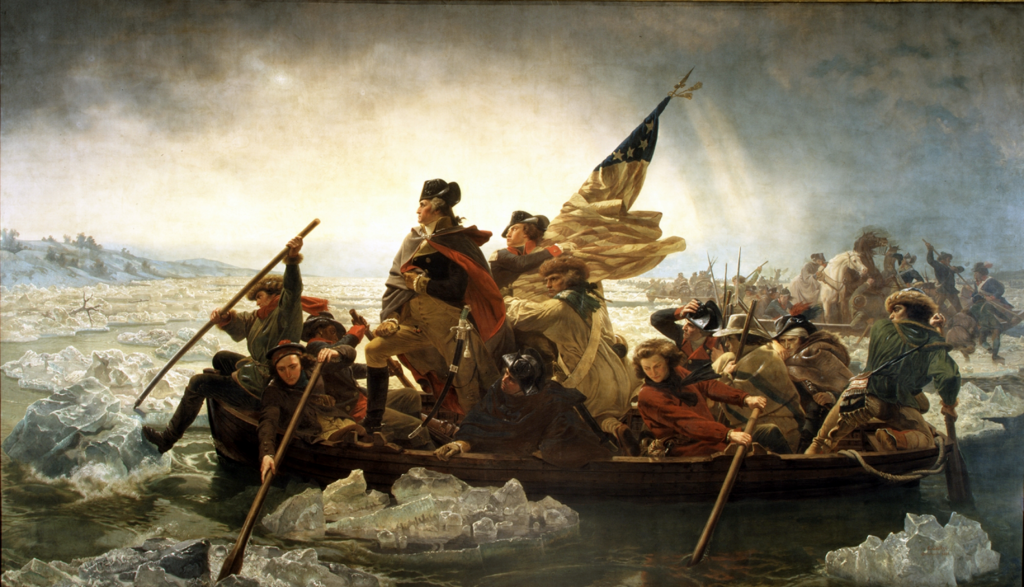
At sunset on Christmas Day, 1776, Washington gathered 2,400 of his men at McKonkey’s Ferry on the Delaware River, approximately 9 miles north of Trenton. It was a bitter cold night, with a heavy snow falling and no moon to light their way. Large Durham boats were pressed into service to ferry the men, artillery and horses across the river. As the night wore on, and the temperatures continued to drop, Washington and his men slowly began the treacherous crossing of the Delaware. The crossing was accomplished under strict orders of silence, so that any British scouts would not be altered to the American attack. Most of the river had frozen over, so each boat had men at the helm smashing at the ice to break it apart. The crossing was so hampered by the dismal weather that commanding officers feared that they would lose the element of surprise in a pre-dawn attack, but they pressed on.
Audio Transcription
James Monroe did not cross with the rest of the army that night. He and a detachment of 50 men under the command of Captain William Washington, George Washington’s second cousin, had been sent ahead of the main army to guard the junction of the Pennington and Lawrenceville roads and prevent any warnings of the American attack from reaching Trenton. Captain Washington then sent Monroe and a few others to guard the road closer to Trenton. Monroe and his companions took up posts near a farmhouse on the outskirts of the town. During the night, as they maintained their watch and struggled to stay warm, the owner of the farmhouse happened to stumble upon the soldiers. The man was Dr. Riker, a physician and a patriot to the American cause. Upon seeing the sad state of Monroe and his men, Riker invited them in to his home to warm up and have something to eat. The men refused, wishing to keep their posts. Riker brought the food to them instead, and being so moved by the men’s sacrifice for the cause, volunteered to accompany them into Trenton during the attack and act as a surgeon. This chance encounter would later prove to be one of the most important in Monroe’s young life.
Washington’s army managed to arrive on the outskirts of Trenton after dawn the next day. The picture before the exhausted American troops upon their arrival was one of a town still sound asleep after a night of holiday celebration. It was Captain William Washington’s detachment of 50 men, including James Monroe, who lead the attack from Pennington Road.
As the Hessians began to realize what was happening, three regiments made a feeble attempt to form ranks in the center of town; but they were quickly disrupted by American artillery under the command of Henry Knox. The Continentals began ducking into houses and buildings and firing from windows and doorways. They quickly swarmed throughout most of the town.
At the intersection of Pennington Road and a “V” made by King and Queen Streets, the Hessians made another defensive move by attempting to mount two cannons. Monroe and Captain Washington lead a charge of the Hessian position, taking the cannons and preventing a massacre of American troops at the Pennington Road bottleneck. Both Monroe and Washington were severely wounded in the charge. Monroe was wounded in the shoulder by a musket ball that severed one of his main arteries. He would have bled to death on the spot had it not been for the immediate attention of Dr. Riker, Monroe’s new friend from the night before. Riker was able to stop the bleeding and “take up the artery,” so that Monroe could be removed from the battle, thus saving his life.
After only an hour of fierce fighting, the Hessians surrendered. 868 men had been taken prisoner by the Americans, and 106 had been killed. Only four Americans were wounded, including James Monroe, and none were killed. The Battle of Trenton would be an unqualified victory for the Americans. It was a major turning point in the war.
The attack on Trenton had accomplished exactly what Washington had hoped. It had proven to the British that Americans were not ready to give up, and it had proved to his countrymen that the British could be defeated. It had restored some hope to the American troops, and the American people.
Monroe’s Recuperation:
Audio Transcription
Monroe’s Recuperation
The American army would move on without Lieutenant Monroe. Monroe spent the ten days following the Battle of Trenton recuperating at the Coryell family home Bucks County, Pennsylvania. When he was stable enough to be moved, he was transported to the Wyncoop farm for further recuperation over the next three months. He was commended for bravery and promoted to the rank of Captain. He would carry the lead musket ball in his shoulder for the rest of his life.
After briefly serving in Virginia as a military recruiter, Monroe returned to Washington’s camp in Bucks County, where he was informed that the army did not have a command available for him. The brutality of the conflict thus far had turned many soldiers into officers-the army was short on enlisted men, not leaders. Washington gave permission for Monroe to stay in camp, however, and he was soon promoted once again to the rank of Major. This promotion led to his assignment as aide-de-camp to General William Alexander, Lord Stirling, a man who Monroe credited with teaching him everything he knew about military tactics.
Battle of Monmouth Courthouse:
Audio Transcription
Battle of Monmouth Courthouse
Throughout most of June, 1778, Washington’s army shadowed the movements of the British, now under the command of Sir Henry Clinton, as they made their way northward to New York from Philadelphia. The Americans initiated small skirmishes and generally harassed the long British convoy for several weeks, before Clinton brought his men to rest in New Jersey near the courthouse in the town of Monmouth on June 26th. Washington saw his chance to engage Clinton, and possibly defeat him, although several of his advisors argued against a full-scale battle. Among these advisors was Major General Charles Lee, who argued that since France had joined the war effort, victory was ultimately inevitable and there was no reason to risk major combat. Washington considered the advice, but chose to proceed. Lee was put in command of a detachment that set off Monmouth Courthouse on June 27th.
At 9:00 in the morning on June 28th, Major General Lee began his assault on the British, but he did it without a clear plan of attack. His men were crushed, and fled in all-out retreat, although it is uncertain whether or not Lee ever gave that order. Washington and his officers managed to bring the situation under control, organizing a defensive line. James Monroe and Lord Stirling’s men held the left of Washington’s line.
Monroe had been sent out with a group of 70 men under his command to observe and report on the British movements. His reports were delivered directly to both Washington and Stirling. Stirling’s men managed to strike the blow that eventually won the day for the Americans. Late in the afternoon, Clinton sent the 42nd Regiment of Foot, known also as the Black Watch, against the left flank of the American line. Lord Stirling’s leadership and the new prowess of the American riflemen under his command managed to repel the attack, and even mounted a counterattack. This counterattack pushed the British back and essentially ended the threat to the Americans.
By the end of the battle, the American casualties stood at 72 killed, 37 of which died of heat stroke, and 161 wounded. The British lost 147 men, more than 60 of whom died from the heat, and 170 wounded. These numbers were the officials totals, but it is almost certain that they were much higher. Washington kept his men on the field, which they still held the next morning. For that reason, the battle was considered an American victory, although in actuality it was more of a draw.
A Soldier No More:
Audio Transcription
A Soldier No More
For James Monroe, the Battle of Monmouth Courthouse would be his last as an officer in the Continental Army. Monroe was increasingly frustrated with his lack of command, and while he enjoyed his time with Lord Stirling, he felt his talents could be put to better use than as an aide. Finally, in the summer of 1779, Monroe resigned his commission in the Continental Army, and requested that both Stirling and General Washington write letters of recommendation for him, in the hope that he might get a command in the Virginia state militia. Monroe was appointed a Lieutenant Colonel in the state militia and was given permission to raise his own regiment to be employed in the defense of the state. However, the regiment to be employed in the recruitment was almost impossible.
In the meantime, Monroe was put on active duty in Williamsburg. He reined there until December, when he finally decided that there was no hope of securing his own command. He officially left the military and returned to the College of William and Mary with the intention of finishing his studies.
Thomas Jefferson became the governor of Virginia in 1779, and had met James Monroe when Monroe had come to Williamsburg with his letters of recommendation from Stirling and Washington. Jefferson has taken an instant liking to the young man, and they began a friendly correspondence, in which Jefferson often advised Monroe on his career. By June of 1780, Jefferson had convinced Monroe to leave William and Mary and come to Richmond and continue his law studies under Jefferson’s tutelage.
In May of 1780, the British occupied Charleston, South Carolina, and for the first time since the war began, Americans in the southern states were confronted with the very real possibility of a full-scale invasion. Jefferson sent James Monroe on an urgent mission to establish a system of messaging expresses along his route through Virginia and North Carolina. Every 40 miles, Monroe was instructed to set up a station for riders to await reports from further south, which they would relay to the next station, and so on until they reached Jefferson’s hands in Richmond, much the same way the Pony Express would work in the next century. Monroe was instructed to gather information on British movements and to advise Jefferson on the state of plans to repel a British attack in North Carolina. In this capacity, Monroe was more than happy to join the army in North Carolina as an observer and to go out on their daily marches. In August he returned to Virginia, much more satisfied that he had done something worthwhile in contribution to the American cause. The dream of a brilliant military career was by then out of Monroe’s reach, but he was beginning to see other possibilities for his future. The establishment of Jefferson’s express system was James’ Monroe’s last official duty as a member of the military.
In 1782, he took his first step towards the career path that would become his passion for the rest of his like-public service. He was elected to the House of Delegates from King George County, in order to replace his uncle Joseph Jones who had been named as a delegate to the Continental Congress. Immediately, many of the revered elder statesmen of Virginia like George Mason and Richard Henry Lee, took notice of the young men, and it was obvious that his star was on the rise. In 1786, Monroe married New Yorker Elizabeth Kortright, and they moved to Fredericksburg, where they had their first child. Monroe continued his law practice in the circuit court system.
Although his military days were done, James Monroe had found a new way to fight for his country-through the emerging world of national politics. The principles and values instilled in him during long years of war and revolution would stay with him for the rest of his life, and would be a key factor in the opinions and causes that he would champion as a congressman, senator, governor, Secretary of State and War, and eventually President of the United States.