Skeleton Clock:
Audio Transcription
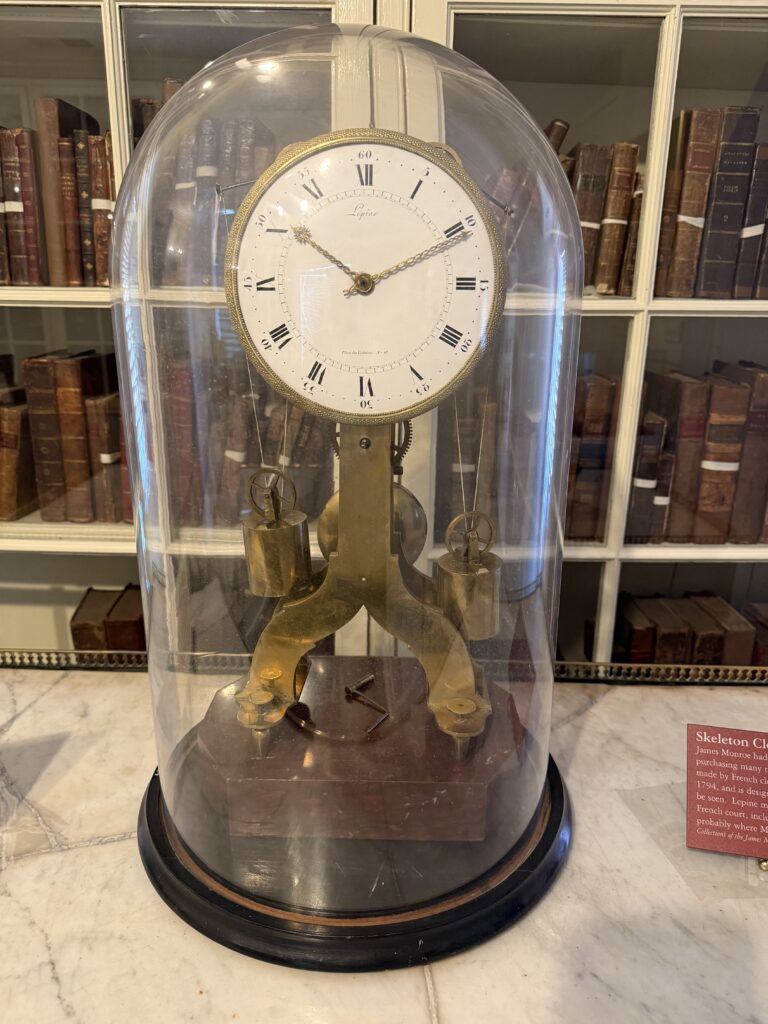
James Monroe was particularly interested in clocks and barometers and purchased several throughout his political career. The Skeleton Clock on display was made by French clock maker Jean Antoine Lepine and earns its name by having all internal components on display through the glass casing. Monroe likely met Lepine through his ambassador role to the French because Lepine was a prolific clock and watch maker for the French Court. The skeleton clock also exemplifies the idea that Monroe was a man of science, and that he was knowledgeable about technologies. This trend to display one’s education through material culture was very popular among wealthy elites in the early 19th century, and boils down to men trying to brag about their intelligence to their peers.
Bas Relief:
Audio Transcription
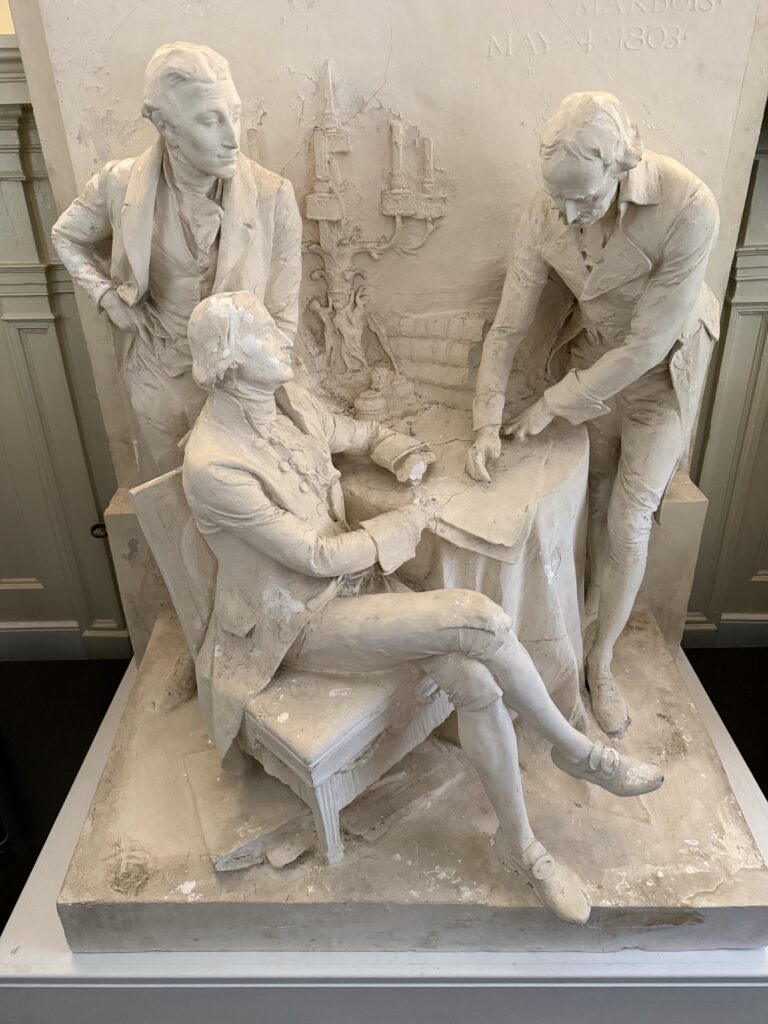
For the 1904 St. Louis World’s Fair sculptor Karl Bitter produced a large bronze depiction of James Monroe, Robert Livingston, and Francis Barbe-Marbois signing the Louisiana Purchase Treaty. Recognized as a moment of great importance to United States history, Monroe was directly involved with the negotiations and discussions with France to enact the treaty that granted more than 530 million acres to the United States. The sculpture now rests at the Missouri state capital, and on display is a scale model that was meant to be a temporary reference. The preservation of the bas relief was largely due to its storage at the University of Mary Washington, however, it has since been moved to be displayed in the museum.
Elizabeth’s Jewelry:
Audio Transcription
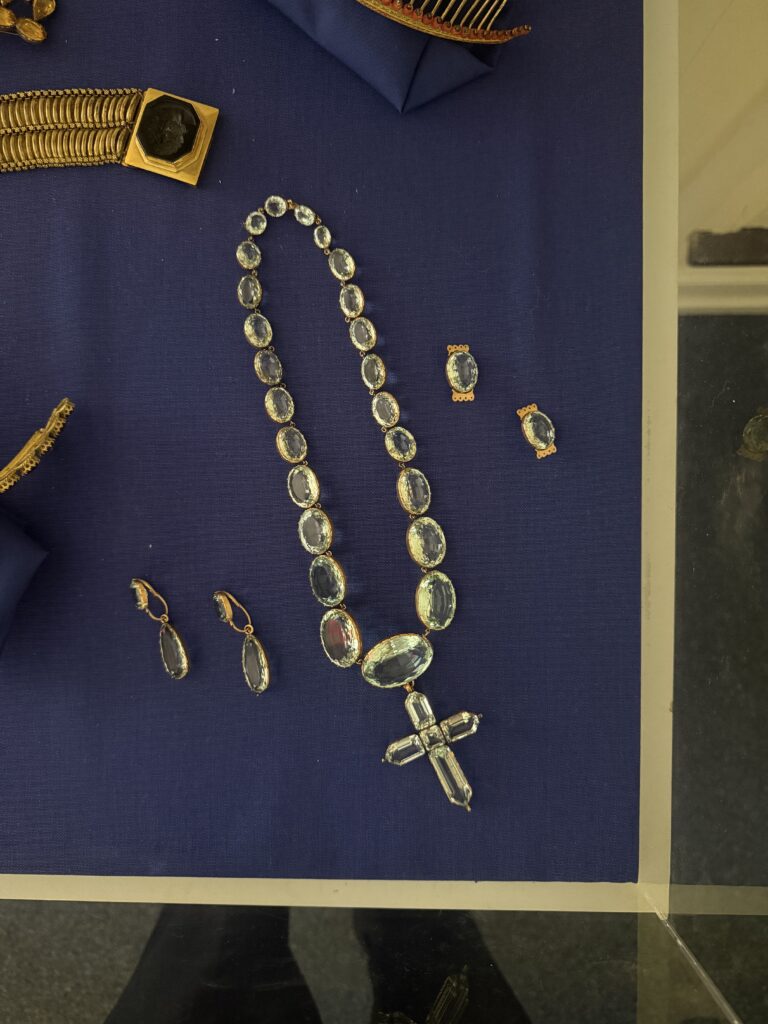
Several of Elizabeth Monroe’s jewelry pieces are on display, each known to be worn by Elizabeth herself. Many of these pieces were a product of the Monroes living in France, and are meant to be perceived as French pieces of jewelry. The Monroes understood that they were representing the young U.S. and had to look the part, but also did not want to directly copy the French so they could establish themselves as separate from France. It was a fine line the Monroes had to walk, but their presentation was ultimately a large part of it. Pieces like the Aquamarines and Citrines were very popular for American women in the early republic, and were directly inspired by French jewelry.